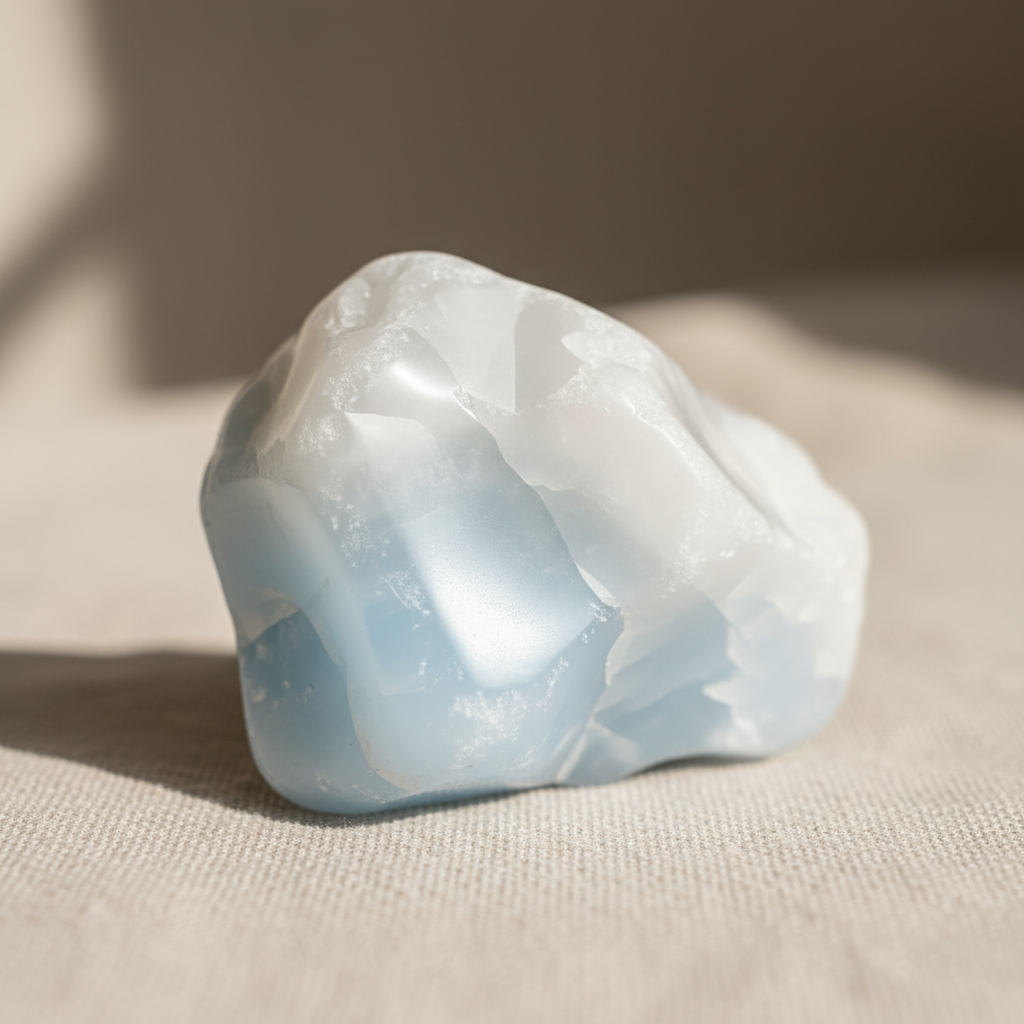
Anhydrite Crystal Meaning & Properties
Soft calcium sulphate crystal for calm boundaries, gentle emotional release and clear communication.
Anhydrite is a soft white-to-blue crystal often chosen for calm presence, gentle release of tension and clear, kind communication.
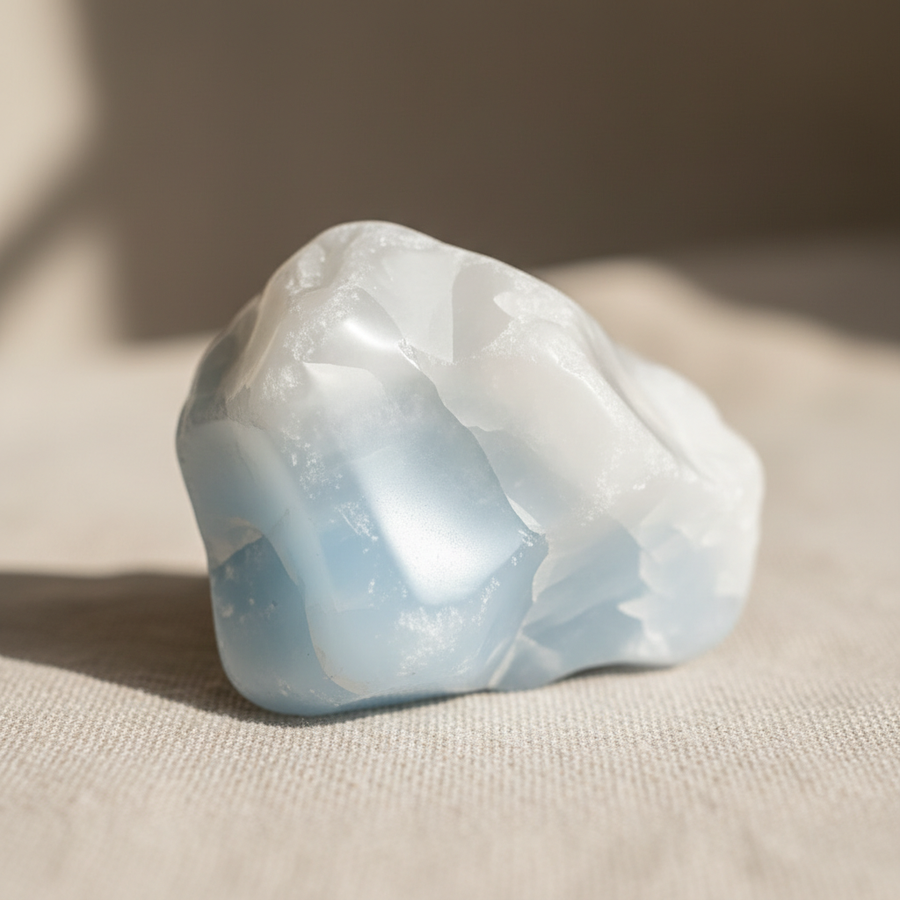
A Brief Introduction

Origin & History
Where Anhydrite comes from and how people have worked with it over time.
Anhydrite forms when calcium sulphate crystallises without water, typically in thick evaporite sequences where ancient seas or lakes slowly dried and left behind layered deposits of sulphate minerals. Over geological time it may also develop by the dehydration of gypsum at depth, later being brought closer to the surface. Classic occurrences include large subsurface beds and outcrops in parts of Europe, North America and Latin America, where anhydrite sits alongside gypsum, halite and related minerals. In the crystal market, collectors often favour pieces with soothing blue tones or banded patterns that fit calm, minimalist interior styling.
Major Deposits Worldwide
Key regions where high-quality Anhydrite is found.
Physical Properties
A quick look at how Anhydrite behaves as a mineral.
-
Hardness: 3.0 on the Mohs scale
-
Luster: Vitreous to pearly, sometimes satin-like on polished surfaces
-
Transparency: Translucent to opaque
-
Treatment: Natural, polished or carved for altar pieces and palm stones
Chakras & Zodiac Correspondences
Energetic alignments and astrological connections for Anhydrite.
Anhydrite Healing Properties
Symbolic support for gentle emotional release, calm communication and soft boundaries.
How to Use Anhydrite in Everyday Life
Weave its soft, steady presence into communication, rest and reflection.
How to Cleanse & Care for Anhydrite
Keep your crystal vibrant and energetically clear with simple care rituals.
Daily Practice
Incorporating Anhydrite into your life
How to work with this crystal
-
Anhydrite is an anhydrous calcium sulphate mineral that typically forms in layered evaporite deposits where ancient seas or lakes have dried and left behind thick beds of sulphate minerals.
-
It may appear in massive or blocky forms in soft white, grey or pale blue tones with a subtle satin-like sheen.
-
In some localities it occurs alongside gypsum, halite and other evaporite species, and can slowly convert to gypsum when exposed to water over long periods. With a Mohs hardness around 3, anhydrite is relatively soft compared with many jewellery stones and is best suited to altar pieces, palm stones and carefully protected jewelry rather than heavy everyday wear.
-
In modern crystal work it is often associated with calm, honest communication, gentle emotional release and soft but steady energetic boundaries.
Care & Handling ›
-
Keep each piece in its own soft pouch or box compartment so chains and stones do not rub or tangle.
-
Avoid keeping jewelry in bathrooms or other humid spots; store in a dry, cool place away from direct heat.
-
After each wear, gently wipe jewelry with a soft, dry cloth before putting it back into storage.
-
Take jewelry off for sports, workouts, heavy lifting and housework to avoid dents, chips and deformation.
-
Do not leave jewelry in hot cars, near windows or heaters for long periods; store in a cool, shaded place.
-
For water-safe jewelry, soak briefly in lukewarm water with mild soap, brush softly, then rinse and dry thoroughly.
Journal Prompts
Simple questions to explore while working with Anhydrite.
-
Where in my life would calmer, clearer communication help me feel safer or more understood? Which responsibilities or emotions feel heavier than they need to be, and what could I gently release? What does a soft but steady boundary look like in one current relationship or situation? How can I invite more quiet support—people, practices or spaces—into my daily routine?
Affirmations
Short phrases to repeat while you wear or hold Anhydrite.
-
I am allowed to speak gently and clearly about what I need. My energy can stay soft while my boundaries remain steady. I release emotional weight at a pace that feels kind to my body and mind. Calm, truthful communication helps me move through change with more ease.
Companion Crystals
Other stones that pair well with Anhydrite in grids or stacks.
Gentle Reminders
A few important notes to keep Anhydrite work grounded and gentle.
-
Crystals are a supportive ritual, not a substitute for professional medical or mental health care. Always listen to your own boundaries and work with gemstones as gentle reminders rather than promises of specific results.
FAQs about Anhydrite
Short answers to common questions about this crystal.
Is anhydrite suitable for everyday wear? ›
Rings can also be worn regularly as long as you avoid hard knocks, abrasive surfaces and heavy manual work.
Taking your anhydrite pieces off before workouts, cleaning or DIY projects will help keep them looking bright for longer.
Can anhydrite go in water? ›
Avoid long soaks in hot tubs, chlorinated pools or salt water, as they can dull the surface or affect settings over time.
After any quick rinse, dry the jewelry thoroughly with a soft cloth before storing or wearing it again.
Which zodiac signs is anhydrite best for? ›
Many people choose it for themes like Calm Presence & Soothing Energy, Gentle Emotional Release and Clear, Kind Communication.
If its look and story resonate with you, it's a good match regardless of your chart.
What intentions is anhydrite most often used for? ›
You can incorporate it into simple rituals like holding a stone while you set intentions, meditating with it nearby, or keeping it on your desk or bedside.
Treat it as a supportive symbol and reminder, not a guarantee of specific outcomes.
How do I cleanse and recharge anhydrite? ›
You can also set your intention silently while holding the stone, imagining any heavy energy rinsing away.
Avoid harsh chemical cleaners or very strong midday sunlight for long periods, as those can affect the colour or surface over time.