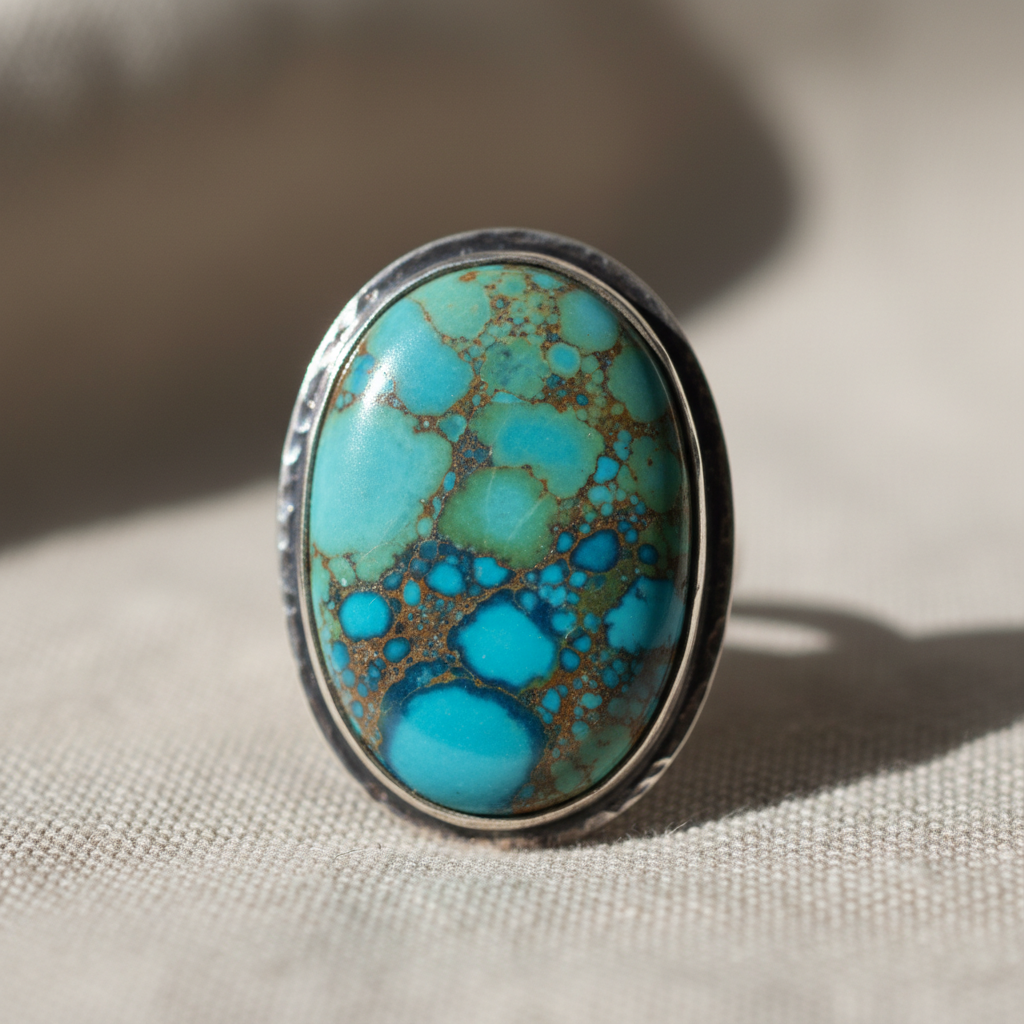
Turquoise Crystal Meaning & Properties
Vibrant turquoise gemstone with natural matrix for boho-inspired jewelry.
Blue-green gemstone with natural matrix, ideal for everyday jewelry.
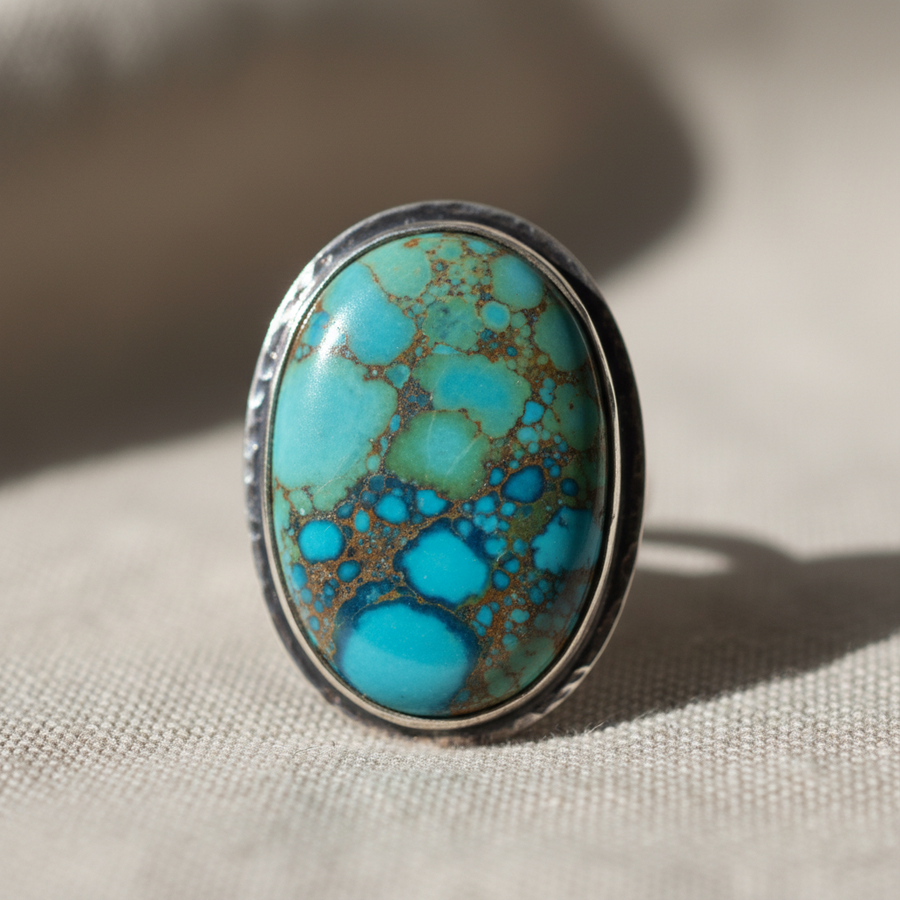
A Brief Introduction

Origin & History
Where Turquoise comes from and how people have worked with it over time.
Turquoise forms when copper-rich waters slowly react with aluminium- and phosphorus-bearing rocks in dry climates, creating veins and nodules of opaque blue-green material. From ancient Egypt and Persia to Native American traditions, turquoise has been worn as a sign of protection, status and safe passage on long journeys. Today it remains a classic choice for statement pieces, inlay and everyday protection talismans across many styles of jewelry.
Major Deposits Worldwide
Key regions where high-quality Turquoise is found.
Physical Properties
A quick look at how Turquoise behaves as a mineral.
-
Hardness: 5.5 on the Mohs scale
-
Luster: Waxy
-
Transparency: Opaque
-
Treatment: Natural, stabilized
Turquoise Meaning & Symbolism
Discover what this turquoise crystal represents across cultures and practices.
Chakras & Zodiac Correspondences
Energetic alignments and astrological connections for Turquoise.
Modern Energetic Themes
How people most often work with Turquoise today.
Meaning & Healing Properties
Explore the key energies and themes of Turquoise.
Good Luck
-
For interviews, launches, first dates and those days when you want a bit more serendipity
Calm & Stress Relief
-
For anxious minds, over-scheduled weeks and anyone who needs help unwinding before bed
Emotional Safety & Comfort
-
For sensitive souls, empaths and anyone who needs a bit more inner safety and comfort
Communication & Public Speaking
-
For presentations, interviews and conversations where you want clear, grounded communication
Turquoise Healing Properties
Themes of protection, clear communication and emotional safety.
How to Use Turquoise in Everyday Life
Practical ways to work with protection and communication themes day to day.
How to Cleanse & Care for Turquoise
Support this more delicate stone with gentle, low-chemical care.
Daily Practice
Incorporating Turquoise into your life
How to work with this crystal
-
Turquoise is a blue-green to sky-blue gemstone with natural matrix patterns.
-
Common origins include USA, China, and Iran.
-
Approximate hardness is 5-6 on the Mohs scale, so it is best for pendants, earrings, and occasional-wear rings.
-
It is often stabilized to improve color and durability.
Care & Handling ›
-
Keep each piece in its own soft pouch or box compartment so chains and stones do not rub or tangle.
-
Avoid keeping jewelry in bathrooms or other humid spots; store in a dry, cool place away from direct heat.
-
After each wear, gently wipe jewelry with a soft, dry cloth before putting it back into storage.
-
Remove jewelry before showering, swimming, sauna, cleaning, or applying perfume and hair products.
-
For stones like turquoise, opal and malachite, avoid perfumes, cleaners and long soaks; wipe gently with a slightly damp cloth only.
-
Avoid ultrasonic machines for porous, fragile stones and plated or glued jewelry, as vibration can cause damage.
Companion Crystals
Other stones that pair well with Turquoise in grids or stacks.
FAQs about Turquoise
Short answers to common questions about this crystal.
Is turquoise suitable for everyday wear? ›
Rings and bracelets can be enjoyed, but it's better to treat them as occasional-wear and take them off for hands-on tasks.
Avoid hard knocks, scratching against metal or stone surfaces, and heavy manual work while wearing turquoise to protect its surface and lustre.
Can turquoise go in water? ›
Avoid wearing it in the shower, pool or ocean, and do not soak it for cleaning, as water and chemicals can dull the surface or affect the structure.
Instead, wipe the stone gently with a soft, slightly damp cloth if needed, then dry it thoroughly before storing.
Which zodiac signs is turquoise best for? ›
It's usually chosen to support themes like Protection & Safe Travels, Clear Communication and Emotional Safety.
That said, you can work with this stone regardless of your sun sign—choose it if you feel drawn to its colour and energy.
What intentions is turquoise most often used for? ›
You can incorporate it into simple rituals like holding a stone while you set intentions, meditating with it nearby, or keeping it on your desk or bedside.
Treat it as a supportive symbol and reminder, not a guarantee of specific outcomes.
How do I cleanse and recharge turquoise? ›
You can also set it near a window for soft morning or moonlight, avoiding strong midday sun that may fade colour or dry the stone out.
Skip ultrasonic cleaners, harsh chemicals and long soaks in water to keep the surface smooth and luminous.